
Air Conditioner Problems and Solutions
April 15, 2026
Are Electric Panel Heaters Any Good?
April 28, 2026Types of Air Conditioners
The Australian summer can be brutal at the best of times, with air conditioners essential for keeping your home cool. There are several different air conditioner types, each with their own unique characteristics, benefits and drawbacks, that make them suitable for different situations. Homeowners may prefer a stand-alone system, such as a portable or wall-window air conditioner, or the popular split system or ducted cooler. When evaluating the right air conditioner, we recommend considering your budget, climate and the dimensions of the area you’re looking to cool.
4 Major Types of Air Conditioners
When choosing the right air conditioner, most homeowners will debate between four major types. These include the following:
Split system air conditioner
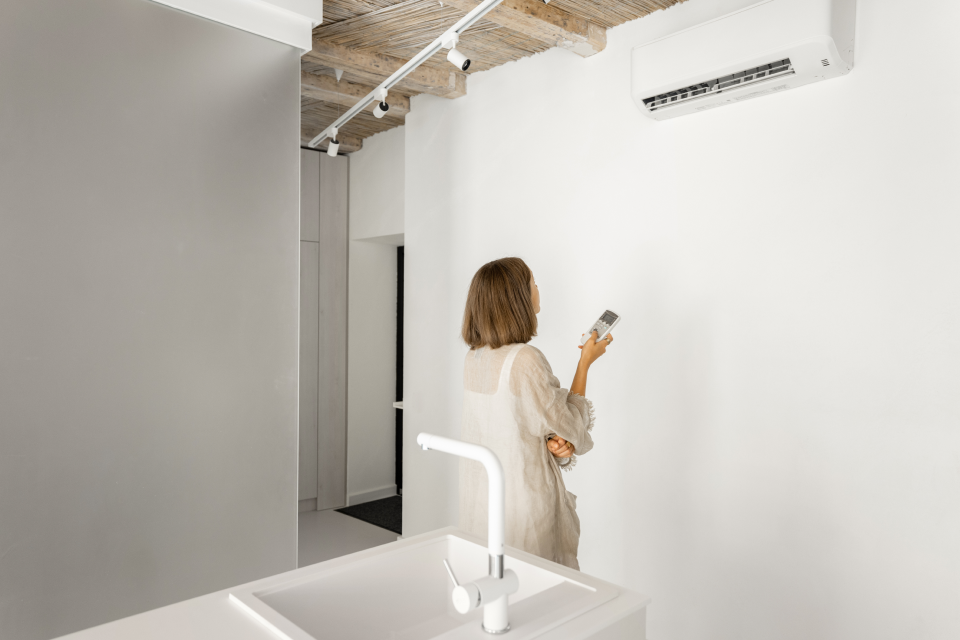
Generally, the most common air conditioner for Melbourne homes. They consist of one indoor unit that’s mounted on a wall, and one outdoor compressor unit. They are designed to target individual spaces or rooms of a home, rather than an entire property. Using reverse-cycle technology, a split system is well-suited for changing seasons and can provide both heating and cooling.
Compared to a ducted system, which requires extra ductwork throughout a home, a split system only requires small pipes that connect the outdoor and indoor units. This means they are cheaper upfront, with a more straightforward installation. They can operate incredibly quietly, with impressive energy efficiency, helping to lower electricity bills.
If you’re only targeting specific rooms of your home and want a comfortable temperature year-round, a split-system air conditioner is ideal, offering an impressive balance between performance and cost.
Multi-split air conditioners
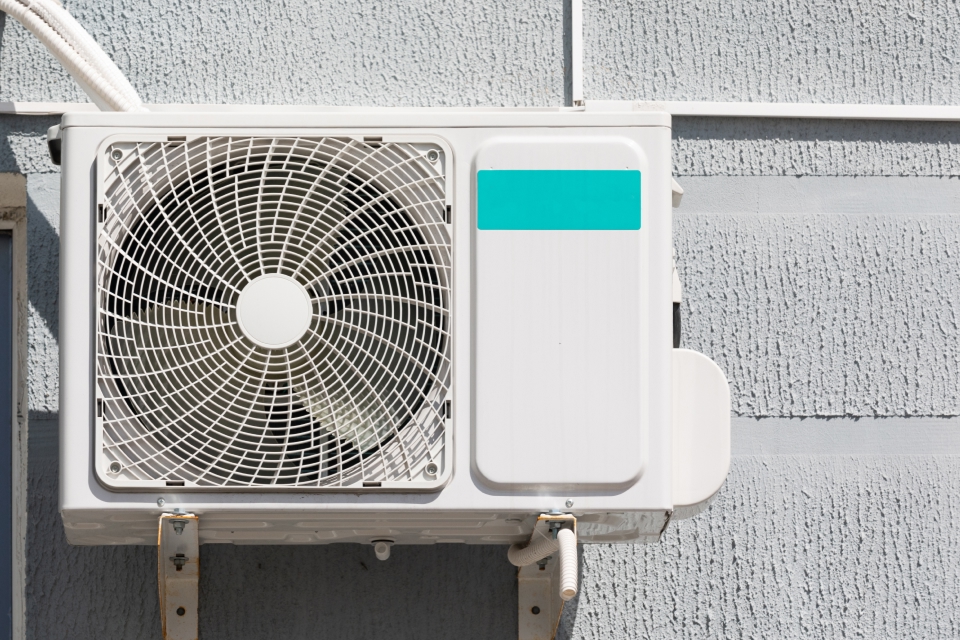
If you’re looking for a simple way to target multiple rooms without having to install ductwork throughout your home, a multi-split air conditioner offers a smart solution. These systems allow multiple indoor units to be connected to just a single outdoor unit.
This means every room can operate independently from each other to set their own temperature, helping to keep everyone in your household happy. Furthermore, because you only need a single outdoor unit, this helps to reduce the cost of adding split systems to multiple rooms.
These systems are an excellent choice for apartments, as it allows coverage to multiple rooms without sacrificing valuable space outside.
Although connecting multiple units inside to a single outdoor unit can be difficult and often requires a complex installation.
Ducted air conditioner
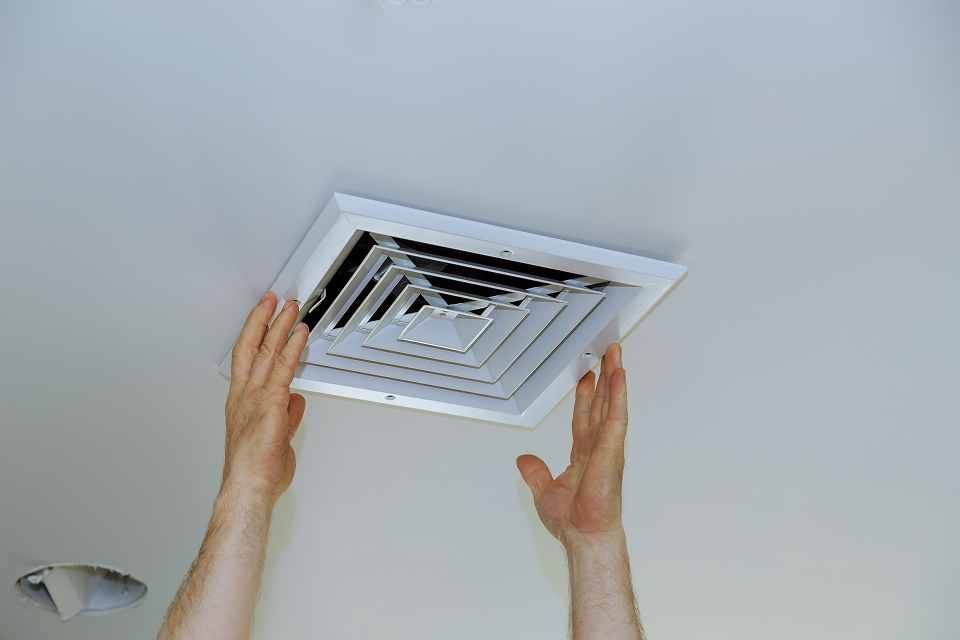
A ducted air conditioner provides whole-home heating and cooling. It does this by circulating air through a hidden network of ducts and vents in each room. This air originates from a central unit, usually concealed away within the roof or hidden under the floor.
With the ductwork concealed and the air travelling silently throughout your home, a ducted air conditioner is discreet and more aesthetically pleasing than a split system.
One of the more impressive benefits of choosing a ducted system is its ability to zone the various parts of your home. This basically means that you can control the temperature of different rooms and make adjustments wherever you need.
The installation process can be complex, with an extensive amount of ductwork that can be costly for homeowners. Although if you’re looking for whole-home coverage, a ducted air conditioner can be a cost-effective solution, especially when compared to adding a split system to each room.
Evaporative air conditioners
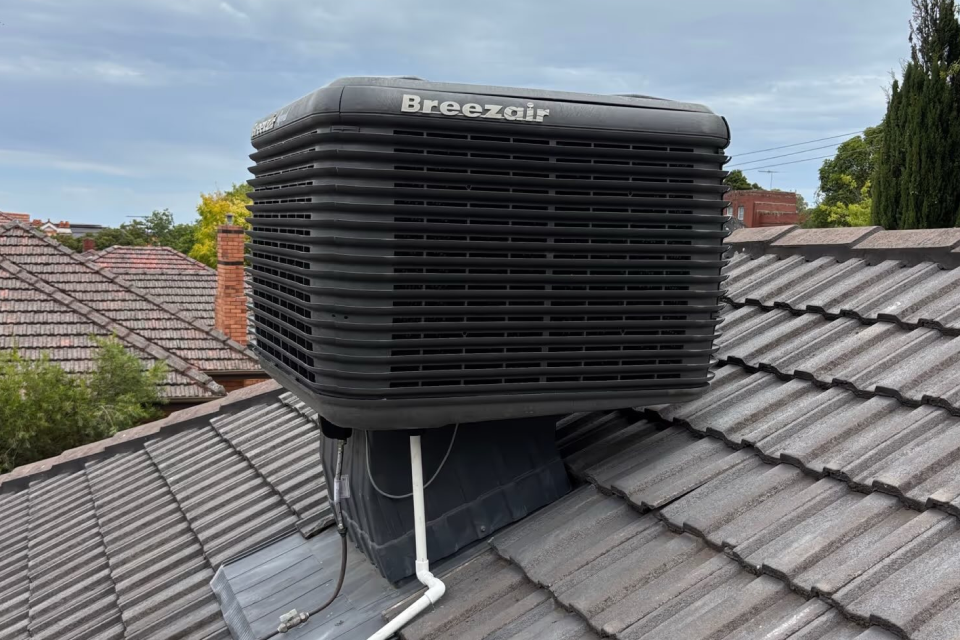
Also known as evaporative coolers, evaporative air conditioners cool air through the evaporation of water. It works by drawing in the hot, dry air from the environment, which is then filtered through wet pads that cool the air before it’s blown into the home. Because these units increase the humidity of your home by introducing cool moisture into the air, windows need to be partially open to allow air to circulate.
Because of the filters built into the unit, evaporative air conditioners only circulate fresh air, helping to reduce air pollution and allergens. This means they are great for people with asthma or allergies. Evaporative air conditioners are also affordable and well-suited to hot-dry climates.
How to Choose the Right Air Conditioner Type?
To help you choose the right type of air conditioner, we recommend considering the following factors:
Size
Arguably, the most important factor in your choice of air conditioner should be the size of the room or area you’re looking to target.
If it’s just a single room or a smaller area, a split-system will typically be the best choice. If you’re looking to target multiple rooms, a multi-split system may be preferred due to its ability to connect multiple units for independent temperature control.
On the other hand, if you want coverage to your entire home, then a ducted system, with its impressive coverage, may be recommended. Consult with a local professional or the team at Simplyair for a proper evaluation based on your specific needs.
Efficiency
Every air conditioner has different energy efficiency levels that will affect its running costs. This is important because less efficient air conditioners will be more costly to run.
Split-system air conditioners that can provide heating and cooling are typically the most efficient option. Particularly for managing temperatures through all seasons of the year. On the other hand, ducted systems are usually less efficient because of the amount of energy that’s lost as the air makes its way through the ductwork.
If you’re still feeling unsure, check a unit’s energy efficiency label for a more detailed estimate of its running costs.
Climate
Your local climate should dictate your air conditioner type, because different systems are better suited to different conditions. For example, evaporative air conditioners work to add cool, moist air to a home. This process works best in low-humidity regions where dry air can be evaporated to create a cooling effect. However, in high-humidity regions, the added moisture can make a household feel warm and muggy.
One of the best ways to assess an air conditioner’s suitability for different climate zones is by checking its energy rating label. This shows three cooling and heating star ratings based on three distinct climate zones of Australia.
Melbourne is a designated cold climate zone, meaning you should refer to the black sections of your air conditioner’s energy rating label. Split systems are a popular choice for balancing Melbourne’s hot summers and cold winters efficiently.
Shape and design of the property
The design of your property should also dictate the air conditioner type you choose. For example, if you currently live in an apartment building where outdoor space is limited, you may be looking for a compact, temporary option like a portable air conditioner. Conversely, if you have a large property with multiple floors, a ducted system with zoned capabilities allows for uniform coverage through all areas of your home.
An air conditioner specialist, such as the team at Simplyair, can conduct a thorough assessment of your property’s shape and design to find the perfect solution.
Cost
Air conditioner types can vary heavily depending on their cost. Units that are simple to install are usually the most affordable. This includes portable and wall-window air conditioners, because they are compact and combine affordable components into a single unit. On the other hand, a ducted system will have the highest upfront cost with a complex installation that requires the assembly of multiple ducts. To find a custom quote for your property, please contact the experts at Simplyair.
Additional Types of Air Conditioners
Homeowners may also encounter some additional types of air conditioners. These typically include the following:
Reverse cycle air conditioner
A reverse cycle air conditioner can both heat and cool, with the ability to reverse its operation to suit different seasons. When in heating mode, a split-system extracts heat from the outdoors, which is then released inside. It can then reverse this process to cool, absorbing heat from within, which is then sent to the outdoors.
They are designed to support year-round comfort, especially for parts of Australia that struggle with heat and cold throughout the year. Although this added versatility does come with a price, as they typically have higher upfront costs than other units.
Portable air conditioner
A portable air conditioner is a compact, mobile unit that offers a convenient cooling system. They are standalone, freestanding units that can be moved between rooms. Portable air conditioners offer a simple installation process, with their refrigeration system incorporating an exhaust hose that runs to a nearby window to vent heat outside, while cool air is circulated back inside.
However, because its components, such as the compressor and fan, are stored within one box, it is noisy. It also can’t cool rooms that are greater than 500 square feet as effectively. For renters or people looking for a versatile cooling system, a portable air conditioner is both adaptable and incredibly affordable, with an easy setup process.
Wall-window air conditioner
Like a portable air conditioner, a wall window is a self-contained unit that’s installed within a window frame or a permanent opening in a wall. They are designed to cool a small room quickly and affordably, with an all-in-one design that houses the entire refrigeration system, including a compressor, condenser, and coils.
These air conditioners are great because they typically come with a low upfront cost and a relatively simple installation that doesn’t require any major modifications. They can also be dismantled and moved to another location, making them a great air conditioner for renters or those intending to move house.
The Victorian Energy Upgrades (VEU) program provides valuable rebates and discounts to eligible households to upgrade to energy-efficient air conditioners. Under the program, households can receive up to $1,610 for replacing a gas heater, and up to $5,530 for replacing an old ducted gas heater with a modern, energy-efficient split-system.
Understanding the essential air conditioner types can help you find the right system to cool your home. From traditional ducted or split system air conditioning to standalone portable units. For more information on air conditioner types, please contact the knowledgeable team at Simplyair.
Call us Mon-Fri: 8:30am-5pm or leave us a message for a callback.

