
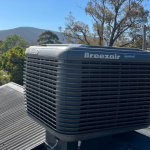
Evaporative Cooling Vs Air Conditioning
January 7, 2026How to Choose an Air Conditioner

Choosing the perfect air conditioner requires careful consideration of a variety of factors. Particularly with so many different options available, it can be difficult for homeowners to find the right fit.
It’s important that you start by understanding the different air conditioner types, each with its own advantages that might make it suitable for your home. For example, while a ducted air conditioner is great for providing coverage to multiple rooms, a split-system is more appropriate for targeting a single room.
Our guide will also break down how to find the perfect size while highlighting the importance of energy efficiency and choosing a reputable brand. You may also want to consider some additional features for improving your comfort, such as an air purifier or a human presence sensor.
Which Air Conditioner Type Is Right for You?
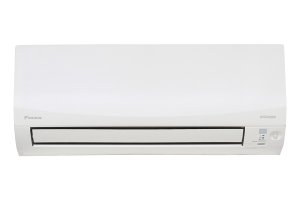
Image: Daikin Cora 2.5kW
There are a variety of air conditioner types with their own unique design and intended use. To find the ideal system, evaluate your specific heating and cooling needs to determine which of the following types suits you best:
Split-system
The most popular air conditioner amongst Australian homeowners. A split-system air conditioner is made up of two major components: an outdoor unit and an indoor unit, which work together. While the indoor unit blows hot or cool air into your room, the outdoor unit releases all the heat that’s extracted from inside.
This is the perfect choice for homeowners looking to heat or cool a single room, or an area of their house, such as a living area or home office. They’ve proved incredibly popular because of their straightforward, flexible installation. Especially when compared to ducted systems, they don’t require any major alterations to your home design. They also operate quietly, making them a perfect addition to a bedroom or living area.
Multi-split system
Multi-split air conditioners work in a similar way to split systems, except they have a single outdoor unit that’s connected to multiple indoor units. The benefit lies in the fact that every indoor unit can work independently from each other, as long as they are all heating or cooling at once.
This provides a lot of room for custom designs, making them great for an apartment or smaller home with limited outdoor space. It’s also a smart way to cover multiple rooms without investing in a complete ducted system, with installers able to tailor a design unique to each individual. However, connecting multiple units can make for a more complex installation.
Ducted
A ducted air conditioner consists of a central unit that circulates cool or heated air through your home with a vast network of ducts and vents. Ducted is great for cooling or heating your entire house, with its ducted network able to reach multiple rooms for a consistent temperature.
Your central unit is typically hidden away within the roof or under the floor, with ducts that are concealed behind walls and ceilings, making them incredibly discreet. Although this form of air conditioning is usually more complex to install, with a higher upfront cost
Wall-window
This is a single all-in-one unit, which is installed within a window or through a permanent opening in a wall. Unlike a split-system or ducted air conditioner, a wall-window has all of its components within one unit, making it an affordable option for those looking to cool just a single room.
They are cost-effective, with a straightforward installation process that can even be done as a DIY. Though they are not quite as efficient as a split-system, as a budget-friendly option with a simple design, they can be incredibly worthwhile.
Evaporative air conditioning
Also known as an evaporative cooler, an evaporative air conditioner is a system that cools air through the evaporation of water. This is an ideal air conditioner for hot climates, as it’s designed to draw in the surrounding warm air via a cooling unit. The air is then filtered through wet pads, with the resulting evaporation allowing the air to be cooled and pushed through into your home. To prevent moist air from building up, this system requires windows to be partially open for the air to properly circulate.
An evaporative air conditioner can be a great option because it only draws in fresh air from outside, meaning allergens are not recirculated. This makes it an excellent choice for people who suffer from allergies or asthma. It’s also very cheap to run, requiring significantly less power than traditional air conditioners, and incredibly effective in hot, dry climates.
Reverse-cycle air conditioner
Households should also consider a reverse-cycle air conditioner. These are a type of split-system that reverses the cooling process to provide heating as well. When your split-system is cooling your interior, it absorbs heat from inside and then releases it to the outdoors. A reverse-cycle air conditioner reverses this process, extracting heat from the outdoors, which is then released indoors to warm up an area.
These air conditioners share all of the same benefits as split systems, with the added flexibility of providing heating and cooling. This makes them a perfect choice for locations that get hot and cold at different times throughout the year.
What Size Air Conditioner Do You Need?
Now that you have selected the right system, it’s time to determine the correct size for your home in kilowatts (kW). This is an important step because a unit that’s too small may struggle to adequately cool your space, while a unit that’s too large may cost unnecessarily more to buy and run. There are many different ways to determine the correct size. You can make a manual calculation by determining your room dimensions, using our room chart guide or consulting with a professional.
You should start by calculating the size of your room in square meters. Measure the length and width of the room, and multiply them together. Once you have calculated the size of your room, take into account our general size guide below:
| Room size | Type of room | Approximate capacity |
| Small (up to 20m2) | Small living room, bedroom | 2–2.5kW |
| Medium (20–40m2) | Medium-sized lounge | 2.5–5kW |
| Large (40–60m2) | Large bedroom, medium to large lounge | 4–6kW |
| Extra large (60+m2) | Open-plan living areas | 5–9kW |
Importantly, the guide above should be treated as an estimate for a single-split or multi-split air conditioning system. There are many factors to consider when choosing the perfect air conditioner size for your home, so the final decision should always be made by a qualified professional.
Beyond just the size of your room, location can also play an important role. For instance, if you live in a humid location such as Darwin, you will typically need a higher kW air conditioner than people in Victoria, to combat the extra heat. An air conditioner specialist, such as the experts at Simplyair, will be able to conduct a thorough assessment of your unique factors to install the perfect size.
For more information on size, explore our article that breaks down all the important factors.
Choosing an Energy Efficient System
When you look for the right air conditioner, you should try to prioritise an energy-efficient system. Particularly as the cost of living increases, the higher your energy efficiency, the cheaper your air conditioner will be to run. Luckily, within Australia, residential split-split system air conditioners have to meet a minimum energy performance standard (MEPS). This basically guarantees that any air conditioner you buy will be already decently energy efficient.
An easy way to gauge an air conditioner’s energy efficiency is by checking the energy rating label.
As of April 1, 2020, all residential air conditioning units must display this label, giving you an easy way to compare different systems.
The more stars, the more energy efficient your air conditioner system is. The label also gives you an energy rating for three different climate zones, to help you find a model that performs best for your location.
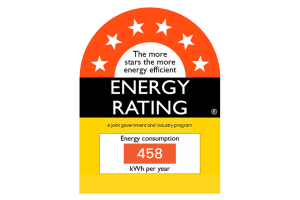
By using the energy rating system to make your decision, this can help you give a better indication of how much money you’ll need to spend on running costs, with a higher star the less it should cost to run. Although a model with two stars is still fine, we recommend a model with five or even six stars for ultimate energy efficiency, although they may be more expensive upfront.
Understand Your Running Costs
An air conditioner can be a sizable investment, and it’s helpful to be aware of the running costs you can expect to ensure it matches your budget. According to CHOICE’s review, the cost of running a medium air conditioner can range between $340 – $650. Although these costs can vary considerably, depending upon your energy usage, the climate zone you are in and how well insulated your home is.
Running costs in colder regions such as Melbourne or Hobart, and hotter regions such as Darwin or Brisbane, tend to be higher than in more temperate areas like Sydney or Adelaide. This is because air conditioners are usually run for longer and use more energy in these climates to maintain a comfortable temperature.
For an accurate estimate of the running costs for different air conditioner types, you can check how many kilowatt hours (kWh) your system is estimated to consume each year by looking at its rating sticker.
Understand Your Climate
Different air conditioners are better suited for different climate zones. For example, within a region such as Melbourne with its infamous “four seasons in one,” there can be substantial temperature variations with hot summers and cold winters. In these conditions, a reverse cycle air conditioner can be an excellent choice.
This is because reverse cycle air conditioners provide strong cooling during the summer months, and are highly efficient heaters during winter. Compared to electric or gas heaters, they are extremely energy efficient which means you’re likely to spend less on running costs. Because of Victoria’s low humidity, an evaporative cooler may also be viable for the region’s hot, dry summers. If you’re unsure about how to pick an air conditioner for your climate, please reach out to the team at Simplyair.
Check Brand and Warranty
When you choose a trusted brand with a solid warranty, this can give you peace of mind that your new air conditioner will perform as intended. Although there are hundreds of different air conditioner brands across Australia, research different customer opinions and ratings to ensure your chosen brand is reputable.
At Simplyair, we only partner with brands we trust and believe in. For air conditioners, these include: Daikin, Panasonic, Mitsubishi, Toshiba and ActronAir. To give you a snapshot of the quality and reliability of each brand, CHOICE has compiled its 2025 brand scores, which factor in recent reviews, reliability and customer satisfaction. The results reveal the following brand scores:
- Mitsubishi Heavy Industries – 74%
- Daikin – 74%
- LG – 73%
- Mitsubishi Electric – 72%
Make sure you also check their warranty period, providing you with a safety net in case of any issues out of your control. Most brands will offer at least a five-year warranty, covering defects in manufacturing, materials and components.
Importantly, just because you have a warranty doesn’t mean you should neglect maintenance. Certain issues, such as blocked filters or flat batteries, that could be solved by regular maintenance, typically aren’t covered in your warranty. Make sure you read all your conditions carefully to understand what’s covered, and speak to your installer if you’re unsure.
Evaluate Additional Features
Once you’ve found the perfect air conditioner for your home, you might consider some additional features to try and maximise its performance:
- Air purification – Some air conditioners may be integrated with filters for air purification, which can reduce allergens, pollutants and other airborne particles to improve air quality. Most major air conditioner brands will offer some form of air purification, which is typically ionisation filters, that improve air quality by releasing ions that gather and eliminate various airborne pollutants.
- Human presence sensor – This feature detects when someone enters a room, so your air conditioner knows it needs to keep working. When it doesn’t detect anyone, your system may switch into economy mode to reduce power consumption. It can be a helpful feature for controlling your energy consumption and for creating a more seamless experience.
- Wi-Fi and app control – This is a helpful way to control your air conditioner remotely. When your air conditioner is fitted with wi-fi connectivity, this allows it to be linked with your smartphone or voice-activated devices. This means you can change the temperature or turn on your system whenever you want, which could be great if you want to arrive home to a cool temperature.
- Sleep mode – This is a popular feature amongst homeowners that allows your air conditioner to smartly adjust the temperature to maintain a comfortable level while you sleep. A great way to remain energy efficient with your air conditioner making small adjustments while using minimal electricity.
Choosing an air conditioner can be a challenging process for any homeowner. However, by unpacking some of the key purchasing factors, you can enjoy all the benefits of a comfortable home. You should address the difference between air conditioner types, the importance of energy efficiency and how to determine the correct system size. For more information on how to choose the right air conditioner, please reach out to the experts at Simplyair.






