

Electric vs Gas Heating
November 2, 2026Best Temperature For Air Conditioning in Summer Australia

For Victorian homes during the sweltering summer months, the best air conditioner temperature setting is usually between 22 and 24°C. Not only should the ideal temperature keep you cool and comfortable, but it should also help you save on energy bills. For Melburnians, setting your thermostat to around 23°C strikes the right balance between comfort and cost efficiency.
The right temperature for your home will be affected by a range of factors, including climate, insulation, and personal preference. Read on to learn more about the best temperature settings to keep your home cool this summer.
Best Temperature to Set Air Conditioner in Summer
As a general rule, the ideal temperature setting for your air conditioner during summer is usually around 22°C to 24°C. Although these settings will vary depending on your region, the following table presents the ideal air conditioner temperature for different parts of Australia:
| Region | Recommended temp |
| North QLD, North WA, NT, Central Australia | 21–23 °C |
| South East NSW, North East VIC, ACT | 22–24 °C |
| South West WA | 23–24 °C |
| South Australia | 24–25 °C |
| Tasmania | 28 °C* |
Source: https://www.alliancecc.com.au/best-temperature-setting-for-your-air-conditioner-during-summer/
What Affects the Best Air Conditioner Temperature?
Several factors will affect the right air conditioning temperature for your home. These will include the following:
Personal comfort
Arguably the biggest deciding factor, your own personal preferences will dictate the right temperature for you. Everybody feels ambient temperature differently; 24°C may be perfect for one person and too hot for another, usually based on factors such as body fat percentage and muscle mass. If you prefer your home a little cooler, your ideal temperature may be closer to 22°C. The key will be to find a comfortable temperature for you that still maximises energy savings without compromising your personal wellbeing.
Home insulation
A well-insulated home can maintain a steady, efficient temperature more effectively. Homes with high-quality ceiling, wall and floor insulation act as a barrier that keeps cool air in. Conversely, poorly insulated or extensive north-facing homes may suffer from thermal leakage, which forces your air conditioner to work twice as hard to maintain the ideal temperature. Understanding the insulation performance of your home can help you adjust your ideal operating temperature.
Climate
Because Melbourne has some of the hottest, driest summer days that can change in an instant with cool changes or rain, your ideal temperature can fluctuate. For example, during a heat wave where outdoor temperatures soar past 35°C, you may need to set your air conditioner to a lower temperature than usual to keep your home comfortable.
Energy Efficiency
Many homeowners may want their property as cool as possible during summer; however, this means your air conditioner will need to work extra hard, which can increase your electricity bills. The perfect temperature should strike a balance between cooling down your home and keeping your electricity bills at a reasonable level.
Those who prefer a higher temperature will be more energy-efficient. This is because for every degree you increase the temperature, you can save around 10% on your energy bills, with the most energy-efficient temperature during summer being the highest one you still feel comfortable at.
How to Reduce Your Air Conditioner Electricity Costs
Adopting just a few small habits can make a significant improvement to your energy bills. Here are some of the steps you can take to get the most out of your air conditioner:
Use the timer
Where possible, take advantage of your air conditioner’s timer feature to run your unit only when needed. Scheduling timers for the morning when outdoor temperatures are lower can be a smart way for air conditioners to reach their desired temperature with less strain and lower energy use. Timers can also be programmed to switch off your air conditioner automatically when you leave the house or go to bed, for added energy savings.
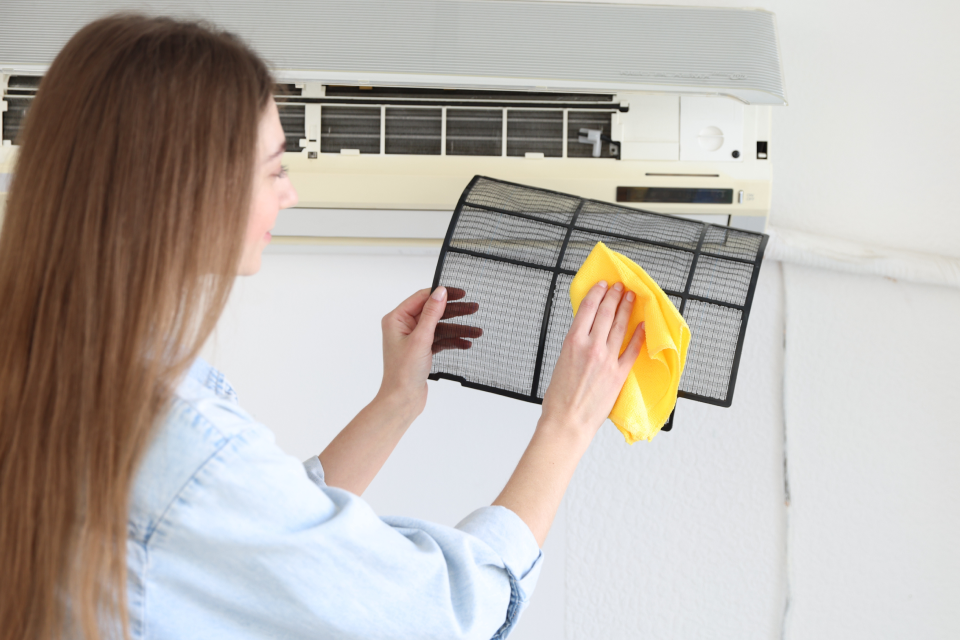
Clean out the filters
When an air conditioner’s filters are clogged up, this can negatively affect performance by restricting airflow and forcing the internal fan to work harder and consume unnecessary power. We recommend cleaning your air conditioner filters at least two to four times a year.
To do this, remove the filter, vacuum or wash away the dust and debris with mild soap and water, then let it dry completely.
Create cooling zones
Try to prioritise the rooms you’re using. Close doors between conditioned and unconditioned areas to reduce the total area your air conditioner has to treat. If you have a ducted air conditioner, utilise the zoning features to only run areas when they are occupied. This helps to cool the main areas of your home faster, to reduce any unnecessary energy consumption.
Insulate and seal your home
The warmer it is inside your home, the harder your air conditioner has to work to cool it back down. Therefore, upgrading your home’s insulation can be one of the best ways to keep your home cooler for longer, and to take the pressure off your air conditioner.
There are many ways to insulate your home, including sealing up drafts and using door snakes to stop cool air from escaping. You can also add reflective window film to reduce the heat coming through the glass. Even keeping your curtains shut during the hottest parts of the day can be an easy way to improve your home’s insulation.
Use your ceiling fans
Where possible, turn on your ceiling fans while your air conditioner is running. This combination can help distribute cool air more efficiently, with a fan pushing cool air down and dragging any warm air up and away from you. Because a ceiling fan makes an area feel cooler, you can raise the temperature on your air con slightly to use less energy.
Choose the right size
Choosing the right-sized air conditioner can make a significant difference to your energy efficiency. If your air conditioner is too big, it will use more energy than is required to cool your home. On the other hand, if it’s too small, it will need to work harder and run for longer to reach your desired temperature, driving up your energy bills without actually cooling your home efficiently.
Choose energy-efficient models
Many of us just stick to our air conditioners’ default modes to heat and cool our homes; however, many modern units have additional features that can benefit you. The energy-saving mode can increase a unit’s energy efficiency, and while it won’t cool as aggressively as it would on standard settings, turning it on a little earlier should achieve the same results.
Why is My Air Conditioner Not Cooling The House Properly?
Especially during summer, when your air conditioner doesn’t seem to be running correctly, it can be a frustrating experience. Here are just a few of the common reasons your air conditioner may be struggling:
Equipment hasn’t been used in a while
When your air conditioner is barely used, dust and debris can accumulate within its internal components. Running it for the first time in months without a quick check can mean it takes longer to cool your home effectively.
Dirty air filters
Clogged or dirty air filters can restrict air flow that forces your air conditioner to work harder to push the same amount of cool air through your home. This not only reduces your cooling performance but can cause your air conditioner to overheat or prematurely shut down.
Gas leak
A refrigerant (gas) leak means your air conditioner doesn’t have enough coolant to absorb indoor heat and properly chill the air passing through. If your air conditioner is blowing continuous warm or lukewarm air, this may point to a potential gas leak that requires a licensed technician to locate and repair safely.
Outdoor or indoor fan not working
A split-system air conditioner relies on the indoor and outdoor unit fans to circulate cool air and dissipate the trapped heat. If either fan stops working due to a faulty motor or broken fan blade, your system won’t be able to cool the air efficiently.
Extremely high temperatures outside
During days when the outside temperatures climb beyond 35–40°C, your air conditioner may struggle to keep up. This is because most residential air conditioners are designed to cool a home to a certain threshold below the outdoor temperature, with extreme heat pushing your AC to its limit, which can slow its cooling down.
Common Air Conditioning Mistakes to Avoid Through Summer
Setting the temperature too low
Setting the thermostat to the lowest possible temperature, often around 16 to 18°C, won’t cool your room any faster; it will just make your air conditioner work harder and use more energy to get there.
Constantly changing the temperature
Adjusting the settings up and down throughout the day will force the compressor to continually restart. This will use much more energy than simply maintaining a steady temperature for consistent, efficient cooling.
Leaving the AC running all day
Running the system continuously throughout the day when no one’s home can be a massive waste of energy. Consider a timer or smart thermostat that can cool your home by the time you get back, without paying for your air conditioner to cool an empty home all day.
Ignoring the outdoor unit
A blocked or dirty outdoor unit will have to work much harder, reducing efficiency and putting extra strain on the entire system. To keep your air conditioner working efficiently, try to keep it clear of any leaves, dirt and plants, while also keeping it away from direct sunlight.
FAQs
Is dry mode better than cool mode?
Dry mode is not inherently better than cool mode, with the right choice depending on the weather. Use dry mode when the air feels damp or sticky but the actual temperature is mild, as the air conditioner acts as a dehumidifier. Cool mode is better suited to sweltering heatwaves, where the air conditioner aggressively cools the air to drop your home’s temperature rapidly.
Does Setting Your Air Conditioner Colder Cool Your House Faster?
No, setting your air conditioner to a much colder temperature won’t cool your home any faster. This is because most units cool at the same rate, regardless of whatever temperature you set. So if you’re looking to reach 22°C at a faster rate, setting it down to 16°C won’t speed up this process.
Is 22°C too cold for air conditioning?
Not necessarily; 22°C is a common temperature set during an Australian summer, and is commonly recommended for balancing comfort with energy efficiency.
Should I turn off the AC when I leave the house?
This entirely depends on how long you plan to be away. If you’re just popping out, it’s usually more energy efficient to leave your air conditioner running at a slightly higher temperature than usual, since starting it back up from scratch will use more energy than maintaining a steady temperature. However, if you’re leaving for several hours, switching it off completely or using a timer will typically save you money on your energy bill.
Although the exact number will depend upon where you live, your home’s insulation and personal preferences; the ideal temperature to set your thermostat generally sits between 22 and 24°C. To stay cool this summer, reach out to the experts at Simplyair, who can design and install the perfect air conditioner for your home.
Call us Mon-Fri: 8:30am-5pm or leave us a message for a callback.

