
How Does Ducted Heating Work
September 17, 2025
The Best Temperature Setting for Air Conditioning in an Australian Winter
December 2, 2025Ducted vs Split System Air Conditioning

Trying to keep your home temperature comfortable through the winter and summer can be a tricky task, particularly in the Australian climate. Installing a good-quality air conditioner isn’t even a choice; it’s a necessary investment to give you control over your home’s temperature.
We understand it can be difficult deciding whether to invest your money in a ducted or wall-mounted split-system air con. Our guide breaks down all the big advantages and disadvantages that matter for either system.
A ducted installation can be a great choice because it provides total-home coverage while operating quietly and efficiently. Split systems can be just as effective, with a more straightforward installation at an affordable price.
What is Ducted Air Conditioning?
A ducted air conditioner is comprised of a central unit, in addition to a vast network of ducts and vents. All of these components work together to circulate cool or heated air to all the rooms in your home. The central unit, typically located in an isolated area such as the roof cavity or external to the home, adjusts the temperature of the air, which is then transported through the ducts to reach your available rooms. The majority of modern ducted air conditioners are reverse cycle, meaning they can supply both heating and cooling.
These systems help to ensure a consistent temperature throughout all parts of your home for maximum comfort and are great for use in large homes and public spaces.
What is Split-System Air Conditioning?
A wall-mounted split-system air conditioner is made up of two major components: an outdoor unit and an indoor unit, which work together. While the indoor unit is responsible for blowing hot or cool air into your room, the outdoor unit releases all the heat that’s extracted from inside.
Typically, your indoor unit is mounted on a wall, but it can also be placed on a floor or ceiling. These systems are designed to cool or heat just a single room, making it a smart choice for those in smaller homes or apartments.
Advantages and Disadvantages of Ducted Vs Split-System Air Conditioning
To help you determine which air conditioning system is right for you, check out the following pros and cons:
Advantages of Ducted Air Conditioning
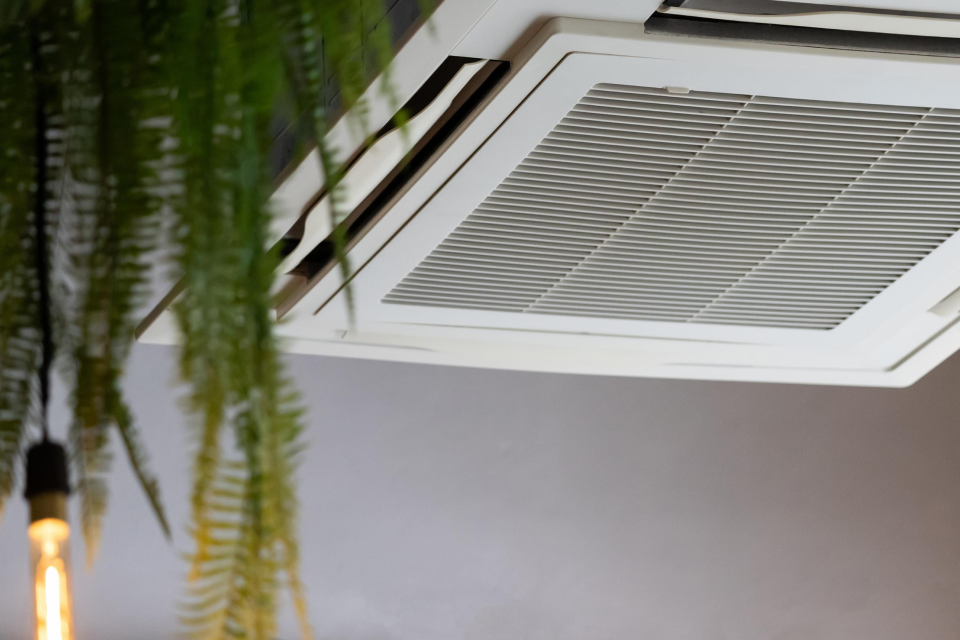
- Whole-Home Coverage
Unlike a single-room split system, ducted air conditioning can be installed for coverage across multiple rooms within your entire house. All your cooling needs stem from just a single unit, with individual ducts transporting cool air for a consistent temperature. - Zoning
You can control the temperature of each individual room in your house by using your system’s zoning feature. This can be incredibly useful for energy efficiency, allowing you to prioritise specific rooms while disconnecting others that aren’t needed. Check with your local installer to ensure your new system is fitted with these zoning capabilities. - Aesthetics
The magic of ducted cooling is that it’s practically invisible. A split-system can be a bulky appliance, especially when placed on your wall in a public area such as a living room or kitchen. Whereas ducted cooling can operate unnoticed, with ducts placed out of sight and a central unit that’s concealed in your roof or under your floor. - Works quietly
With the central cooling unit tucked away, often you won’t even know your system is working until you start to feel the temperature change. Cool air can travel quietly through your ductwork, with just a steady hum and the subtle sound of passing air to keep you company. - Increased Property Value
Because of its energy-efficient qualities, homes that are installed with a ducted air conditioner may fetch a higher price. Therefore, if you are a prospective seller, installing a ducted system could be a nice way to get your home to stand out to buyers in a crowded market.
Disadvantages of Ducted Air Conditioning
- Higher cost
A potential downside to any ducted system is the costs involved, with expansive ductwork and multiple vents to all different parts of your home. Because of the extensive installation, a ducted system will typically cost more than a split-system air conditioner, which can be installed one by one. Although if you’re looking for full coverage, ducted can be more cost-effective than multiple split-systems across your home. - Installation is dependent on the space being suitable for ductwork
Unfortunately, not every home has enough space for a full ducted system. Your home will need sufficient space either within your roof or underfloor to house the central cooling unit and ductwork. You may be in a home that’s too small, or an apartment or a heritage building where installation is unsuitable. - Limited control over individual rooms
Unless you have zoning capabilities, your ducted air conditioner won’t be able to tailor different temperatures to different rooms. This can be particularly frustrating if you’re only looking to target a single room at one time. In this situation, you may end up paying to cool rooms you’re not even using.
Advantages of Split-System Air Conditioning
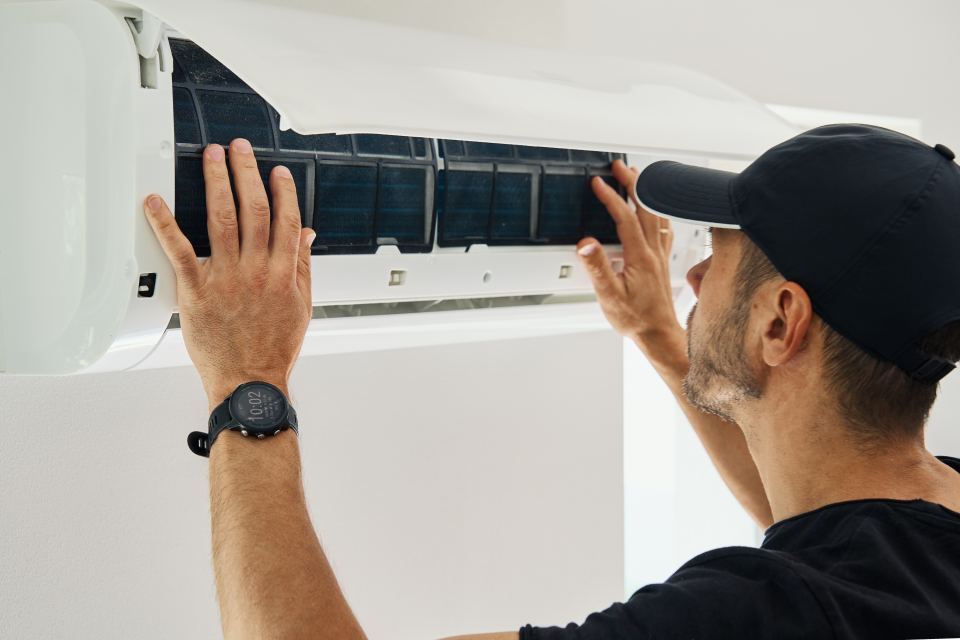
- Flexible installation
A wall-mounted split-system can be installed in practically any part of your room. Unlike a ducted cooler, you don’t have to worry about how your split-system connects to the other parts of your home. This added flexibility makes split systems much more suitable for different properties. A split-system can thrive in an apartment or a small one-bedroom apartment, where ducted cooling is unsuitable. - Energy efficiency
Because a wall-mounted split system is only targeting one room, you naturally have more control over its consumption than you would for a whole-home ducted system. When used efficiently in short bursts, a split-system can be a highly efficient appliance. - Cost-effective
If you’re on a smaller budget, a split-system air conditioner will be the more affordable option. This is because installation is much more straightforward, requiring minimal structural alterations to just a single room. You also have the option to add systems to each room over time to stagger out your investment. - Independent control
Each of your split systems is independent of the other. This allows for personal temperature control in each individual room. It can be a handy way to solve any disagreements over what the “correct” temperature in a home should be. - Easy maintenance
When you install multiple split systems, you have the added benefit that if one fails, it doesn’t affect the others. This independence makes them generally easier and cheaper to repair than ducted heating, where the entire system is interconnected through your home. Please reach out to the experts at Simplyair if you need any support with servicing and repairing your systems.
Disadvantages of Split-System Air Conditioning
- Indoor Aesthetics
We understand that not everyone is a fan of having a bulky box mounted on a wall. For some people, this can be easily ignored, while others may find it a challenge to work around when decorating. - Limited Coverage
Split systems can only cool a single room, with multiple systems required for whole-home coverage. - Impact of the Outdoor Unit
The more split-system units that you install, the more space you’ll need outside to house all your compressors. Depending upon your property, it can be difficult to find adequate space outside, particularly if your walls are filled with dense trees or fencing. This can also diminish the aesthetics of your outdoor space, with multiple bulky compressors around your backyard and home. - Installation Can Be Challenging
Although they’re generally easier to install than a full ducted unit, split systems may still come with their own set of challenges. For instance, not everyone may have a suitable location for installation, with limited wall space or weak structures.
Which Air Conditioning System is Right For My Home?

After reading all their individual strengths and weaknesses, the final decision should come down to your personal circumstances.
For example, if you’re currently living in an apartment or a smaller, one-bedroom home, the ideal would be choosing a wall-mounted split-system. This is because a single split-system will be powerful enough to cool the key parts of your home, where the cost of an entire ducted system would be unnecessary. If your current home also has design limitations that make adding a ducted unit difficult, a split system is a smart choice because of how simple its installation can be.
However, if your home is much larger, and you’re looking for a budget-friendly way to achieve complete home coverage, we recommend opting for a ducted system. Although a single split-system is cheaper, the cost of installing one in every room in your home far outweighs the cost of ducted cooling. When installed with zoning technology, you can enjoy the benefits of whole-home coverage, with more control over the different temperatures in different rooms. Especially for two-storey or more complex home builds, a ducted air conditioner can be designed to provide whole-home cooling regardless of the layout. Simplyair are experts in air conditioning and can help design a ducted system that works efficiently and comfortably for your home.
Both a ducted and a split-system air conditioner can be viable choices. The ducted system’s whole-home coverage, with its zoning capabilities, makes it a superior system for larger homes. Although if you’re just looking to prioritise specific rooms without investing in the full whack of a ducted, a split-system can be just as effective. Please reach out to the team at Simplyair, who can provide expert advice on the right air conditioner for you.
Call us Mon-Fri: 8:30am-5pm or leave us a message for a callback.

